
Observe the work
The project starts by mapping the tasks, the people responsible and the exceptions that affect the operation.
 RVMIT
RVMITCustom software
When the process has its own rules, the project starts from the real operation and the people who work in it.
Talk about this solution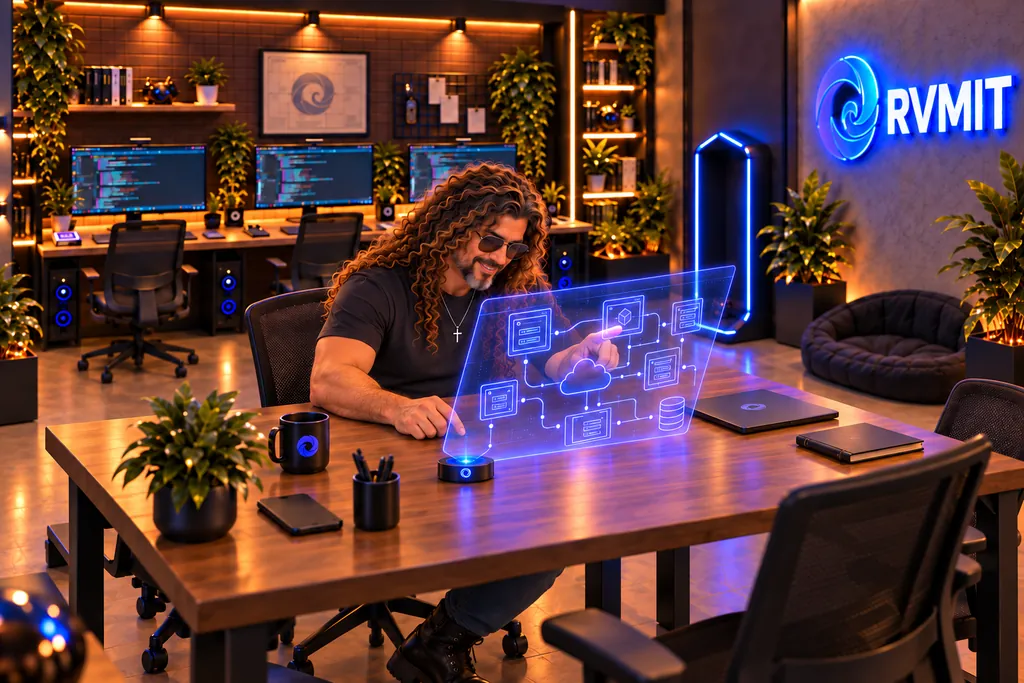
When it makes sense
Spreadsheets on the side, approvals outside the workflow and duplicated data may indicate that the operation needs its own system. These are diagnostic examples; every project starts with a conversation with those who decide and those who do the work.
Project stages
The scenes are illustrations by the RVMIT team. Each project depends on the rules and systems involved.
The project starts by mapping the tasks, the people responsible and the exceptions that affect the operation.

The architecture defines interfaces, rules and integration limits after evaluating the existing systems.

Workflows and error messages are tested in representative usage situations before the interface is adjusted.
Our approach
We combine understanding of the operation, technical design and user experience. Every delivery goes through building, testing and follow-up, with room to adjust the path based on what we learn.
In practice, the work happens in cycles. Each round goes through four steps: we define the objectives and constraints of the delivery, identify the risks and clear up doubts with prototypes, develop and test what was agreed and, with the result in hand, plan the next round. With each round the system grows a little, and the biggest risks show up early, when they are still cheap to fix.
What to look for

Steps, exceptions and responsibilities are visible to the people who use the system.
The screen highlights the task and the information needed to complete it.
Connections to existing systems are defined based on their data, limits and objectives.
Frequently asked questions
Whether it is possible depends on the interfaces, permissions and data available in each system. This is examined during discovery.
We prioritize a workflow with clear value for the operation and verifiable limits, then organize the next steps.
Hosting, support and maintenance are defined in the commercial proposal for each project.

Next step
Tell us the context and the most important rules. The first conversation helps define the right path.